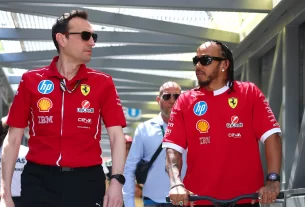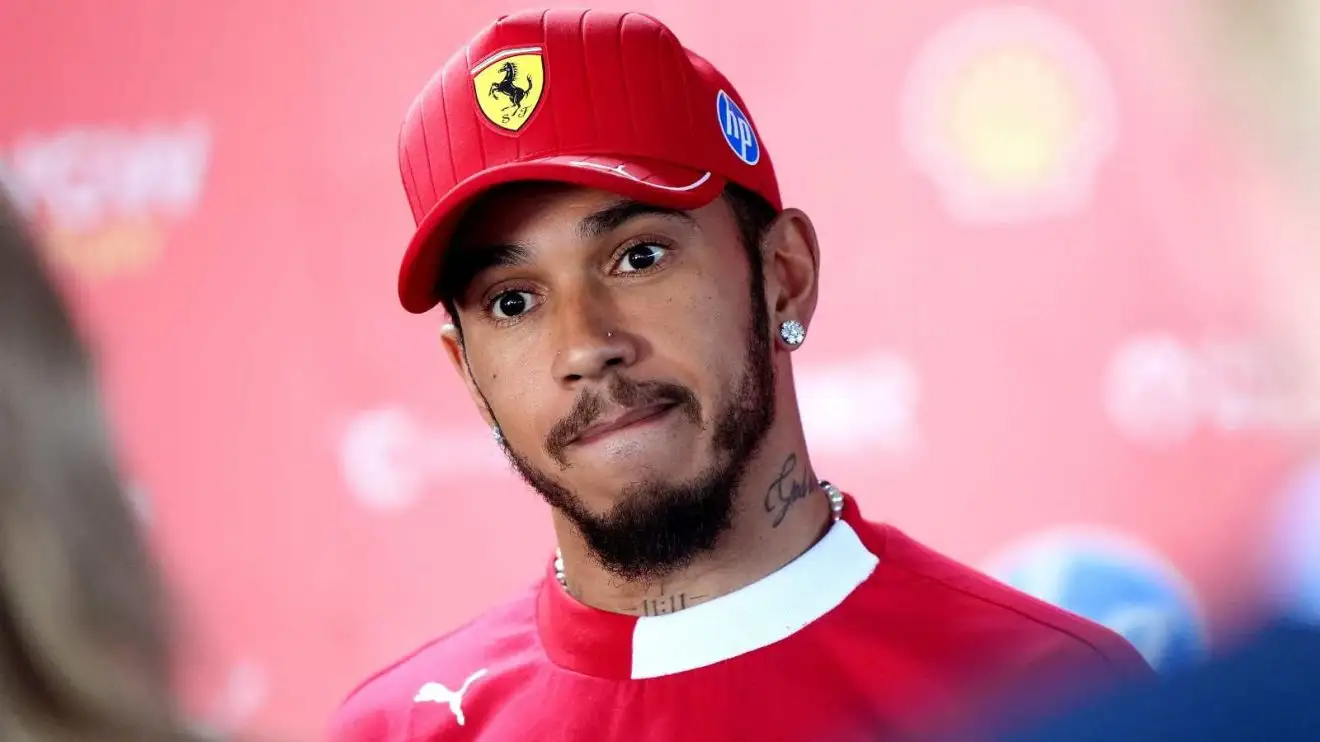
Lewis Hamilton’s move to Ferrari was envisioned as a bold new chapter in his illustrious Formula 1 career. However, 14 races into the 2025 season, the seven-time world champion finds himself in unfamiliar territory—without a single podium finish and grappling with mounting frustrations. His blunt self-assessment after the Hungarian Grand Prix, where he labelled himself “useless” and hinted that Ferrari “might need to change driver”, has ignited fresh speculation about whether Hamilton might be considering an early exit from his current contract.
At the Hungaroring, a circuit where Hamilton has historically been untouchable with a record eight victories and nine pole positions, the British driver could manage no better than 12th in both qualifying and the race. To make matters worse, his teammate Charles Leclerc stunned the paddock by taking pole position in the same car, exposing the stark contrast between the two Ferrari drivers. Hamilton’s struggles with the SF-25 have been glaring, with Leclerc consistently outperforming him this season. The Monegasque has claimed five podiums so far and leads Hamilton 10-4 in qualifying duels and 11-2 in race finishes.
While Hamilton did secure a Sprint race victory in China earlier in the season, his performances in full Grand Prix formats have been largely disappointing. His inability to extract pace from Ferrari’s current car has left him adrift in the midfield, a position that feels alien for a driver accustomed to fighting at the front. His candid remarks in Hungary, where he admitted his frustrations were directed at himself rather than the team, reflect a deeper struggle—a clash between his unrelenting competitive spirit and a car that refuses to deliver results.
Despite the intensity of his comments, Hamilton has downplayed suggestions of a premature departure. He assured reporters after the Hungarian GP that he looks forward to returning after the summer break, beginning with the Dutch Grand Prix. However, as the season drags on, questions are being raised about whether Hamilton’s motivation to stay in Formula 1 will endure if Ferrari fails to provide a car capable of challenging for victories.
Hamilton’s career has been defined by his relentless pursuit of excellence. Yet, at 40, the idea of consistently battling in the midfield is far from appealing. His current predicament is compounded by the fact that Leclerc himself has expressed frustrations with Ferrari’s technical limitations, such as the controversial tyre pressure adjustments during races that compromise performance. This suggests that Hamilton’s challenges are not solely down to a loss of personal form, but rather a combination of car issues and adaptation struggles.
Nonetheless, Hamilton’s desire to win a record-breaking eighth Drivers’ Championship remains a powerful motivator. The bitter memory of the 2021 title loss, a moment that many in the sport still view as controversial, continues to fuel his competitive fire. Toto Wolff, Hamilton’s former Mercedes team principal and close confidant, has often spoken of his “unfinished business” in Formula 1. According to Wolff, Hamilton’s struggles are partly due to the characteristics of the current ground-effect cars, which have not suited his driving style since the regulation changes in 2022.
There is, however, a potential silver lining on the horizon. The 2026 season will usher in a new era of car designs and power unit regulations, presenting an opportunity for teams like Ferrari to reset and challenge the current dominance of McLaren. For Hamilton, the prospect of a fresh start with machinery better tailored to his strengths could be enough to extend his stay in the sport. Wolff believes that if Hamilton is given a car that responds to his inputs and driving style, he remains as capable as ever of fighting for championships.
Off the track, Hamilton’s life is flourishing. His first foray into film production, an F1-inspired blockbuster, has been met with critical acclaim. His ventures in fashion, music, and philanthropy continue to expand, ensuring that whenever he decides to step away from racing, his post-F1 career will be just as impactful. However, as long as the dream of an eighth title remains alive, Hamilton is unlikely to walk away quietly.
Ultimately, the question is not whether Hamilton still has the talent to compete—his race pace and racecraft have proven he does—but whether Ferrari can offer him a platform to win again. If 2025 continues on its current trajectory, Hamilton’s long-term future will hinge on Ferrari’s ability to capitalize on the upcoming regulation changes. Whether Hungary marked the beginning of the end or merely a low point before a grand comeback remains uncertain. What is certain, however, is that the sport is witnessing a pivotal moment in the career of one of its greatest ever drivers.
Fans and observers alike should cherish every remaining opportunity to watch Lewis Hamilton in action, as the next chapter—be it a resurgence or a farewell—promises to be a defining one.