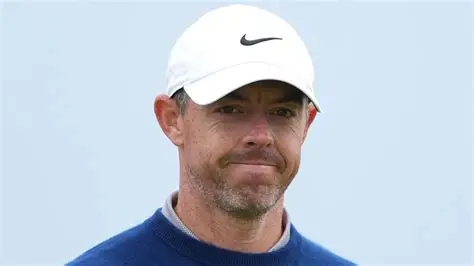
Rory McIlroy will return to Royal Portrush this week with more than a title on the line — for the Northern Irishman, The Open represents an opportunity to conquer a course and a moment that has haunted him for six years. In 2019, when The Open last came to Portrush, McIlroy’s campaign unraveled almost immediately. A quadruple bogey on the first hole set the tone for a disastrous opening round of 79, and although he mounted an impressive fightback with a second-round 65, it wasn’t enough to make the cut. It was a gut-wrenching moment, played out in front of a home crowd that had hoped for something far more celebratory.
Now, as a Masters champion and the holder of five major titles, McIlroy is a different player returning to a familiar, emotionally charged venue. His victory at Augusta earlier this year not only completed his career Grand Slam, but also seemed to lift the psychological weight that had clung to him since his earlier major successes. With further wins at Pebble Beach and the Players Championship under his belt, McIlroy arrives at this year’s Open arguably in the best form of his career.
Still, the emotional scars of 2019 linger, and there is no shortage of voices questioning how he will cope under the immense pressure of playing in front of a home crowd again. Former U.S. Open champion Graeme McDowell, a fellow Northern Irishman and Portrush native, cautioned that the same electric atmosphere that lifted the venue in 2019 could once again prove overwhelming for McIlroy. He pointed to the emotional intensity of the crowd, suggesting that even a more mature and successful McIlroy could find it difficult to stay composed.
However, others believe this time will be different. Paul McGinley, a former Ryder Cup captain and longtime observer of McIlroy’s career, has noted a shift in the 35-year-old’s approach. Unlike in 2019, McIlroy is not shying away from the occasion or downplaying its significance. He is openly embracing the pressure, acknowledging what it would mean to win in front of his own people on one of golf’s grandest stages. According to McGinley, this attitude marks a significant emotional evolution for McIlroy and could be key to his success.
McIlroy himself has acknowledged the unique emotional stakes at play, admitting that lifting the Claret Jug at Royal Portrush would carry even more personal meaning than his long-awaited Masters win. He has also pointed to improvements in his game — particularly his putting — which has historically been a weakness but is now among the strongest aspects of his performance this season. Data from the PGA Tour shows him ranking at the top in putting metrics, and his short-game consistency has noticeably improved.
Moreover, McIlroy’s ability to play lower, wind-resistant shots — a critical skill on exposed links courses like Portrush — has given analysts further reason to consider him among the top contenders. His long game remains as dominant as ever, but it is his adaptability and mental maturity that many believe will define his chances this week.
Justin Rose, a fellow major champion and close competitor, believes that McIlroy has finally found the balance between ambition and control. Rose argued that McIlroy no longer sees external expectations as a burden, but as motivation. “He’s achieved nearly everything there is,” Rose said. “Now it’s about finishing the story. This win would mean more than trophies — it would cement his legacy.”
With weather conditions expected to be challenging, many eyes will also be on competitors like Jon Rahm, whose grit and resilience in difficult conditions could tilt the scales. Nevertheless, McIlroy enters the tournament not just as a fan favorite, but as one of the most well-rounded and in-form players on the planet.
Whether he can channel his current momentum into a long-awaited homecoming victory remains to be seen. But unlike six years ago, McIlroy is walking into Portrush with clarity, confidence, and a deep understanding of what’s at stake — not just for his career, but for his connection to a place and a people who still believe his finest moment could come right where his worst unfolded.