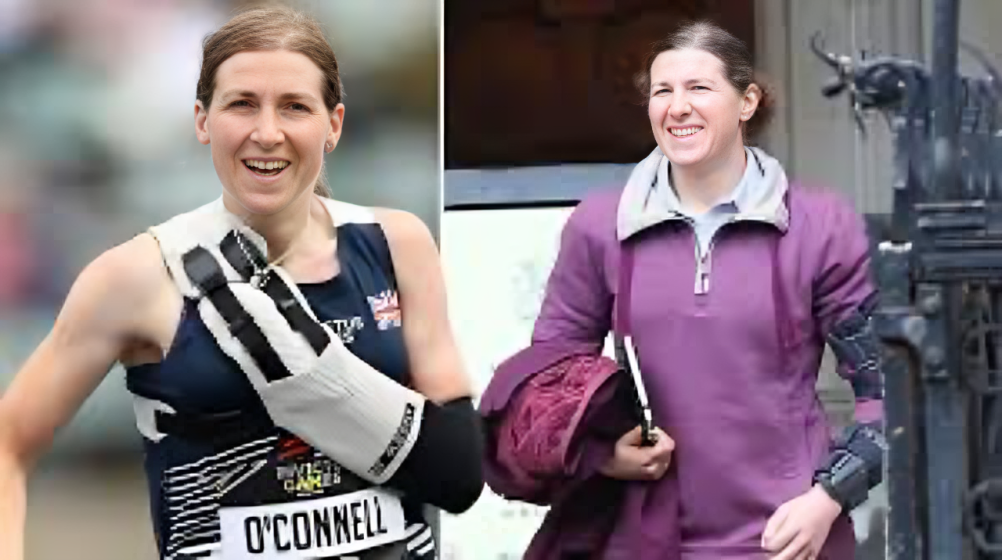
A former British soldier who became a gold medal-winning para-athlete is facing possible imprisonment after being accused of dishonesty in a multi-million-pound compensation claim against the Ministry of Defence (MoD).
Debbie O’Connell, 37, fractured her collarbone in four places after falling from a horse in 2015 while training with the King’s Troop, Royal Horse Artillery. She later claimed the injury left her left arm severely impaired. After leaving the army, she pursued a career in para-athletics and won gold medals in cycling at the 2018 Invictus Games in Sydney.
In September 2018, O’Connell filed a £2.4 million damages claim against the MoD, which was later reduced to £1.74 million. However, the claim was dismissed last year by a High Court judge, who found it to be “fundamentally dishonest.” The court concluded that her claims about ongoing pain and disability were inconsistent with surveillance footage showing her carrying out everyday activities, including leading a horse and preparing food. She was subsequently ordered to pay more than £200,000 in legal costs.
The case has now returned to court after the MoD applied to have O’Connell committed to prison for contempt of court, alleging she misrepresented the severity of her condition during the compensation proceedings.
Mr Justice Coppel ruled that the contempt application should proceed, stating that it was in the public interest where a claim had been found to be prosecuted on a false basis. Contempt of court carries a maximum sentence of two years’ imprisonment.
During the original trial, O’Connell maintained that she experienced chronic pain in her left arm and shoulder following the accident, which led to her discharge from the armed forces two years later. She attributed the fall to ill-fitting riding boots and being assigned a horse prone to bucking.
The MoD disputed her account, alleging she exaggerated her injuries while competing in the T46 para-athletics classification, designated for athletes with limb impairments comparable to an above-elbow amputation. Government lawyers argued that surveillance footage contradicted her claims of restricted function.
O’Connell has denied any wrongdoing, telling the court she accurately described her condition during classification assessments and had been trained to endure pain as part of her military background. Her legal team argued that she had already suffered significant consequences, including the dismissal of her claim and reputational damage, and noted that the earlier findings were based on the civil standard of proof rather than the higher criminal threshold required for contempt.
The court has granted permission for the contempt proceedings to move forward. A further hearing will determine whether O’Connell is in contempt of court and whether a custodial sentence is warranted.